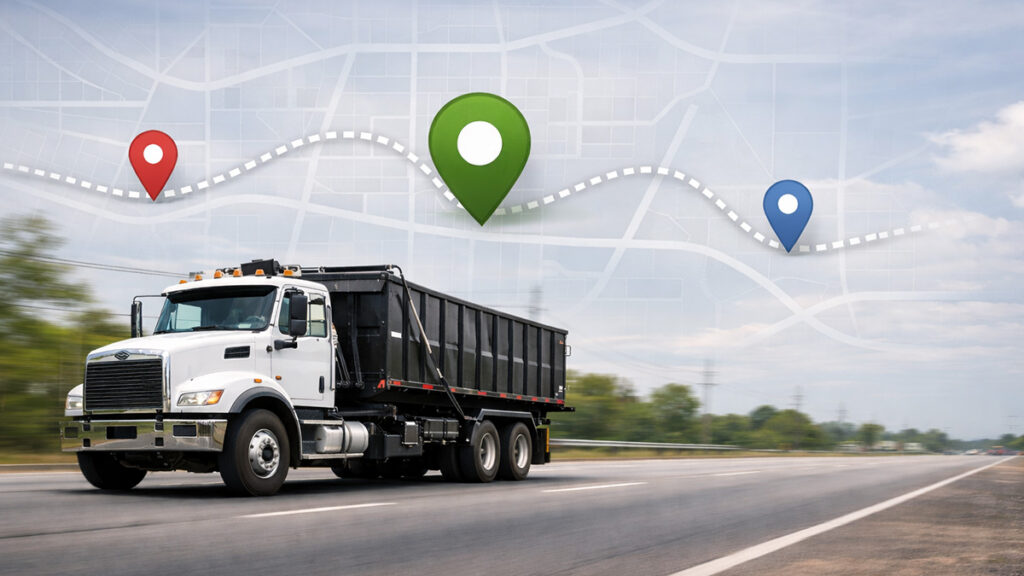
In the dumpster rental industry, one of the best ways to build stronger margins is learning how to optimize delivery routes for roll-off dumpster rentals. Optimizing drop-off and pick-up routes isn’t just about reducing drive time, it’s about controlling your biggest costs and getting your cans back into rotation faster. Especially in the roll-off dumpster industry, there are several built-in constraints that can have a big effect on how profitable your rentals are.
Some of the real-world factors that you have to plan your route around include:
- A roll-off truck hauls one container at a time, so you can’t stack pickups and drops like other delivery businesses
- Most pickups include a dump stop at a landfill or transfer station
- These trucks run on diesel and often travel loaded, so extra miles add up fast in fuel cost
- Every extra mile also adds wear and tear on high-cost equipment (often $100k–$200k+ per truck), especially tires, brakes, and hydraulics
- Pickup timing is customer-driven, not calendar-driven — you often don’t know a can is ready until the renter calls
All these factors make dumpster routing challenging — and the cost of inefficient routing can be huge. When you’re just starting out, you can get by with a notebook and a few phone calls. But once you’re running multiple trucks and more containers, the “make do” approach starts costing you fuel, equipment wear and tear, and revenue, because late pickups keep cans stuck instead of back in rotation.
In this article, we’ll cover why routing matters so much in dumpster rentals, practical strategies to plan more efficient routes, and what to do when route planning starts getting hard to manage by hand.
TL;DR Summary
- Routing is a major profit lever in roll-off dumpster rentals
- Faster routes = faster container turnover
- Smarter routing cuts waste including time, fuel, employment costs, and higher inventory availability
- Manual routing breaks at scale, making software essential for mid-large operations
Why Routing Has an Outsized Impact on Dumpster Rental Margins
Routing matters in any delivery business, but in roll-off dumpster rentals it matters more. Your margins are shaped by fuel spend, dump costs, equipment wear, and how quickly you can get containers back into rotation. Without efficient routing, driving unnecessary miles, often under a heavy load, can wipe out any margin you were expecting to make.
A lot of your overhead is hard to control; insurance, yard space, and the price of fuel are mostly set for you. Routing is one of the few levers you do control: how many miles you drive and how quickly you get cans back into rotation.
Let’s look at what drives costs and container turnover in a dumpster rental business.
The Dump Stop Is Part of the Route
With roll-off dumpster rentals, the cycle doesn’t end when you pick the can up and head back to the yard. You still have to hit a landfill or transfer station and dump it before that container is available for the next job. That means every pickup comes with a dump stop you have to plan for. And if you don’t plan that dump stop well—distance, wait time, and dump fees, it can make a difference in what you actually make on that haul.
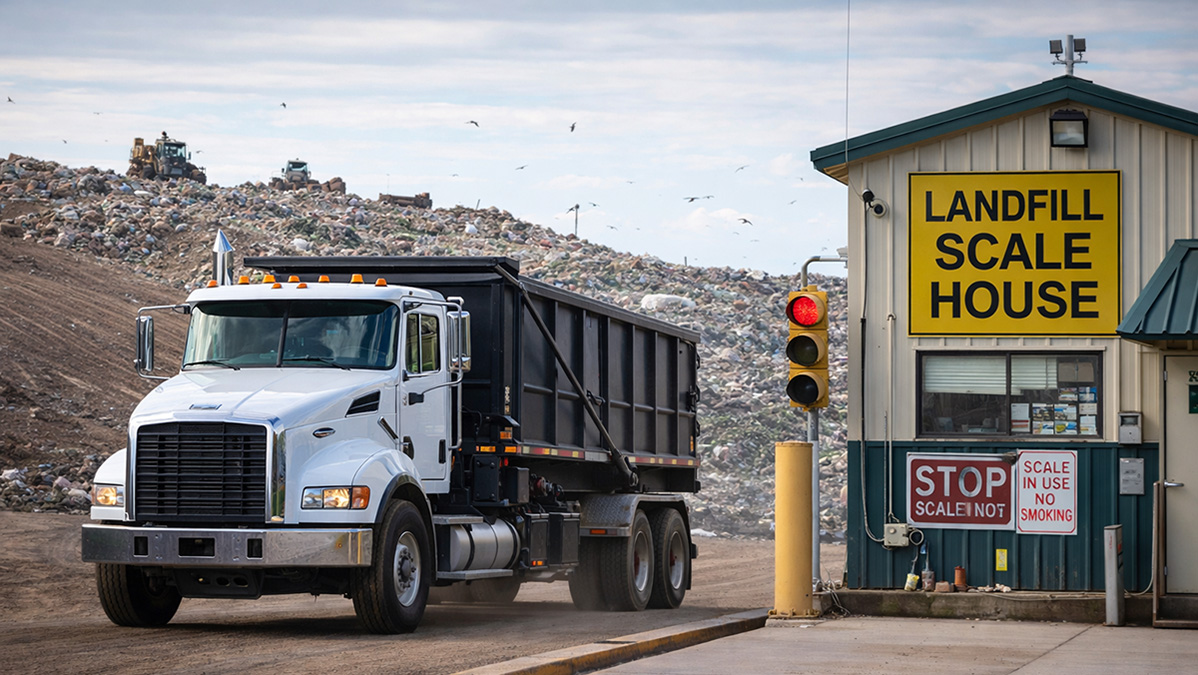
Additionally, landfills themselves can vary in tipping fees and wait times, which should also be considered in in how you plan your routes. They also have specific operating hours, so your last loads of the day have to be routed with closing times in mind. If you miss that window, you’re stuck holding full cans overnight and making an extra trip back to the dump the next day.
If you’re not figuring out how to optimize delivery routes for roll-off dumpster rentals, it’s hard to determine the true effect an extra stop will have on your margin. You could end up wasting miles, losing time, and leaking money.
Fuel Costs Add Up Fast in Roll-Off Rentals
Roll-off trucks are built to haul heavy loads, not to be fuel efficient. This means that if you want to lower fuel costs as a dumpster rental operator, you’re probably not going to be able to improve your fuel economy as much as you can decrease your miles driven with better routing.
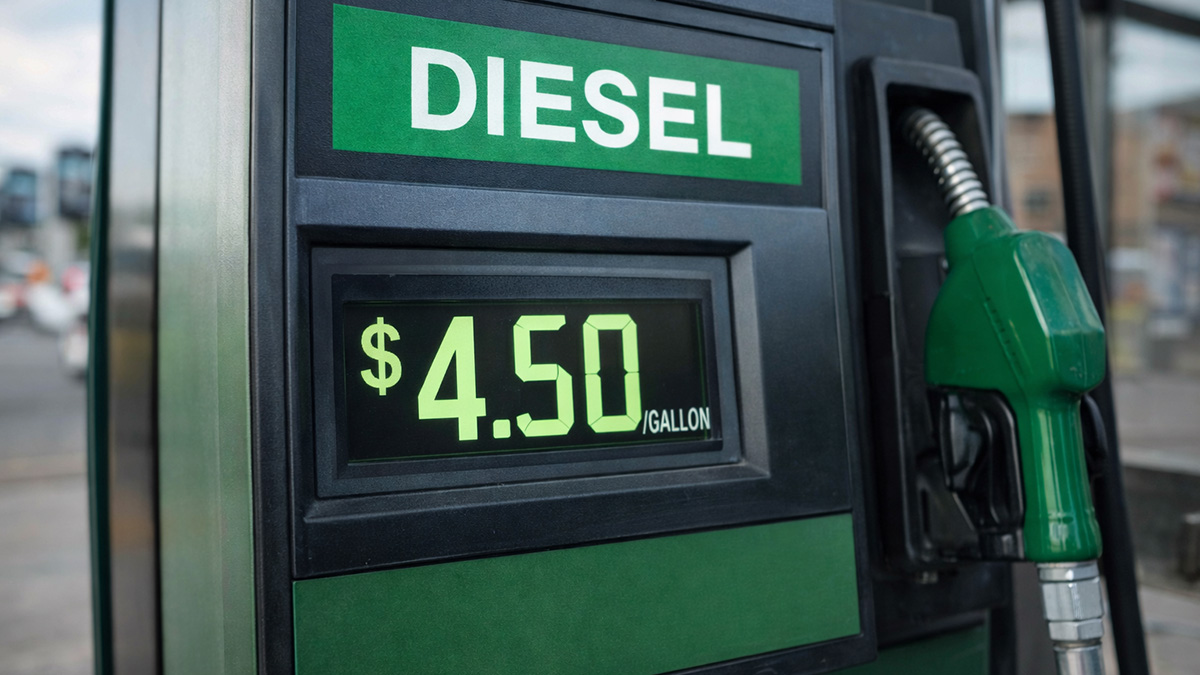
Diesel isn’t cheap, and roll-off trucks burn plenty of it, especially under load. That’s why extra miles are more than an inconvenience. They’re a direct hit to margin. Any routes adding on miles can turn into real dollars by the end of the week, and that’s money you won’t be getting back.
Routing Controls How Fast You Flip Cans
Every business looks for ways to cut overhead. But in dumpster rentals, container turnover is a specific revenue driver. Every can sitting on a job site is a can you can’t yet rent again. And since a roll-off truck can only move one container at a time, your capacity comes down to how efficiently you can pick up, dump, and redeploy cans, one run at a time.
Efficient routing is what makes faster can turnover possible. When pickups are sequenced well and dump runs are planned into the day, cans come off sites sooner, get dumped sooner, and get back to the yard (or straight to the next drop) faster. That means you can rent that same container again without waiting an extra day.
That’s a key revenue driver in roll-off rentals: better routing lets you take more bookings with the cans you already own, rather than have to buy more containers to meet demand when you are running sloppy routes.
Flipping containers more efficiently also allows for upsell options like priority delivery, same-day pickups, and flexible scheduling. All of which are nearly impossible to handle without organized routing.
Learn more about add-ons and upsells that can increase your average ticket price in our DRS guide to the Top Add-Ons for Dumpster Rentals
Dumpster Routes Rarely Go as Planned
Dumpster rentals don’t run on a fixed schedule. Some jobs are completed in a couple of days. Others could run for weeks. And pickups usually happen when a customer calls to say they’re ready, not “according to schedule.” That makes roll-off dumpster routing fundamentally different.
With dumpster rentals, you can start the morning with a well-planned route, then get two early pickup calls and a rush drop within a few hours. If your routing can’t adjust to those changes easily, you can end up with late pickups, wasted miles, and frustrated customers.
Practical Strategies to Plan More Efficient Dumpster Routes
Now that you know why you should optimize delivery routes for roll-off dumpster rentals, let’s look into strategies for planning more efficient routes.
Routing in dumpster rentals will never be perfect. Jobs change, pickups come in early, and the day rarely goes exactly as planned. But that doesn’t mean routing has to be chaotic. With a few practical strategies, you can cut wasted miles, speed up can turnover, and keep routes efficient even as your operation grows.
The strategies below focus on practical ways to plan more efficient dumpster routes as your business scales.
Plan Routes Around Dump Runs, Not Just Job Sites
Efficient routing starts by treating the dump as part of the route, not a “side trip.” That means factoring in the distance to the landfill or transfer station, typical wait times, and tipping fees before you decide which pickups happen first. Just because cans could be near each other in distance doesn’t necessarily mean that they should be picked up sequentially.
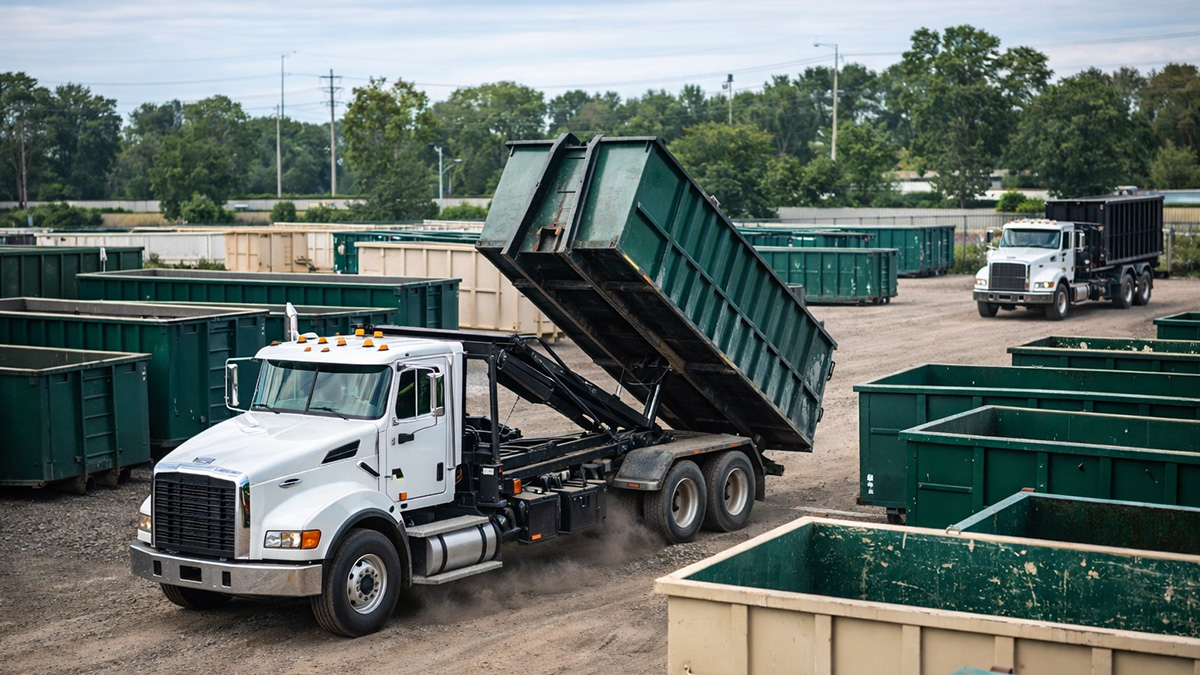
When dump runs are planned into the route, you reduce dead miles and keep trucks moving in a logical loop instead of driving back and forth across town.
Don’t Run Empty: Pair Drops and Pickups
One of the easiest ways to eliminate wasted miles is pairing drops with nearby pickups. Instead of sending a truck out to drop a can and then running empty across town, optimized routing looks for opportunities to drop a container and pick one up in the same area. That keeps trucks working, reduces miles driving an unloaded truck, and shortens the time between pickup and dumping.
This matters because unloaded miles don’t make money. When drops with nearby pickups, drivers spend less time traveling empty, you get the most out of your fuel costs, and cans cycle through the system faster.
It’s a simple routing strategy that pays off every day.
Prioritize Pickups That Free Up Inventory First
In dumpster rentals, not all pickups have the same impact on your business. For many haulers, 20-yard dumpsters are the most popular rental size. That means some pickups bring back containers you won’t need right away, while others free up the sizes you’re already short on. Your routing should prioritize getting those high-demand containers back into circulation as quickly as possible.
When planning your route, prioritize pickups that:
- Release a container needed for an upcoming drop
- Free up a frequently rented container
- Are located nearest to a landfill or transfer station
When trying to optimize delivery routes for roll-off dumpster rentals, routing decisions made with inventory as the priority payoff fast. Containers turn quicker, booking capacity increases, and growth comes from better use of what you already own — not from buying more cans to cover inefficient routing
These strategies are very effective at keeping overhead low and your container turnover quick when your booking volume is manageable. But as volume increases, keeping all of this straight gets more difficult. This is why a software solution like DRS is recommended to optimize delivery routes for roll-off dumpster rentals.
Software that Simplifies Routing as You Grow
When you start out small, route planning by hand isn’t difficult. But as you add trucks, drivers, containers, and daily stops, routing gets harder to manage with a notebook, paper receipts, and phone calls.
This is where dumpster rental software is a valuable tool in keeping routes and inventory organized and optimized. Instead of juggling maps, dumpster locations, and landfill distances, you get one place to plan routes, track containers, and be ready for any impromptu pickups or rush-delivery drop offs.
That’s exactly what Dumpster Rental Systems (DRS) was built for: booking, routing, inventory management, and billing in one system.
The payoff is simple: fewer wasted miles, faster container turnover, and stronger margins as you grow.
If you are interested in seeing how DRS can optimize routing in a dumpster rental operation, book a quick demo.
Frequently Asked Questions
Do All Dumpster Rental Businesses Need Routing Software?
If you only have and rent a 1 or 2 containers, you may not need routing software if you’re organized and don’t mind spending extra time planning routes. Once you reach 3 or more dumpsters, it’s highly recommended to implement a software solution like DRS for routing. This will allow you to save time, fuel, and begin offering add-ons and upsells like priority delivery and flexible scheduling.
What is the Best Software for Dumpster Rental Routing?
DRS is considered the best software system for dumpster routing. With advanced routing tools, superior customer service, and high ratings from multiple customer-reviewed platforms, DRS is considered the best in-class for operators renting 1 to 100+ dumpsters.
Is There a Mobile App for Dumpster Rental Routing?
Yes, there are a multiple apps out there to assist with routing. Our recommendation is the Dumpster Rental Systems (DRS) driver app, which syncs with DRS software to create a complete routing system. DRS allows users to configure routes, with all orders and custom stops, along with taking payments, entering tonnage charges, and more.